Property owners seeking pest control services Nashville residential standards demand can secure immediate structural stabilization against destructive subterranean termites, persistent German cockroaches, aggressive brown recluse spiders, and invasive commensal rodents. MapleDrift Extermination deploys clinical, precision-targeted eradication methods that protect your family and domestic spaces without requiring long-term subscription lock-ins or non-transparent chemical overspray.
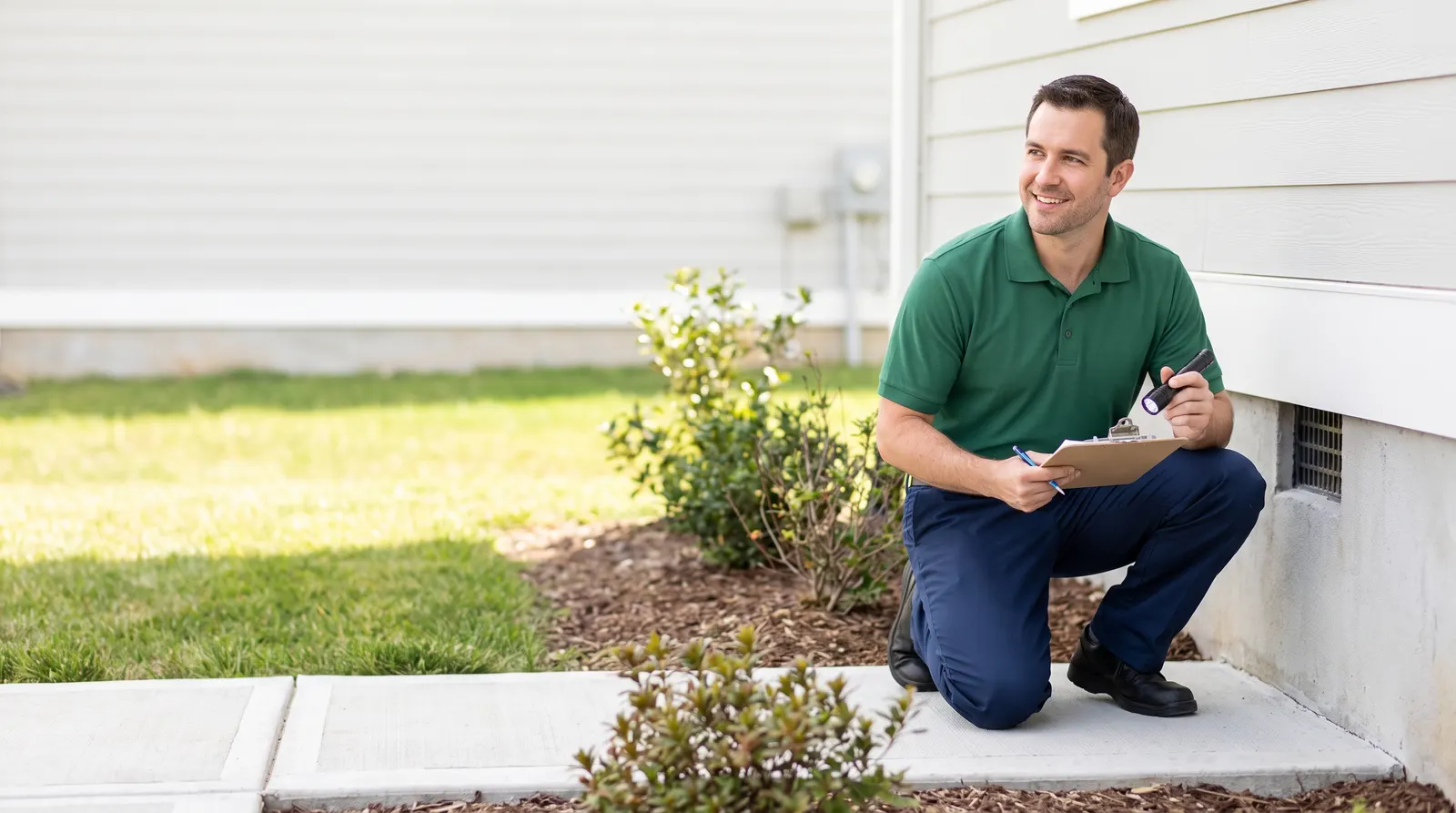
Pest control services in Nashville encompass targeted perimeter barrier applications, botanical liquid soil treatments, interior targeted crack-and-crevice placements, and structural exclusion protocols designed to eliminate active infestations and halt biological pest ingress across Davidson County properties.
Every service reflects the same meticulous attention to detail, whether it's a single job or a larger pest control services project across Nashville.
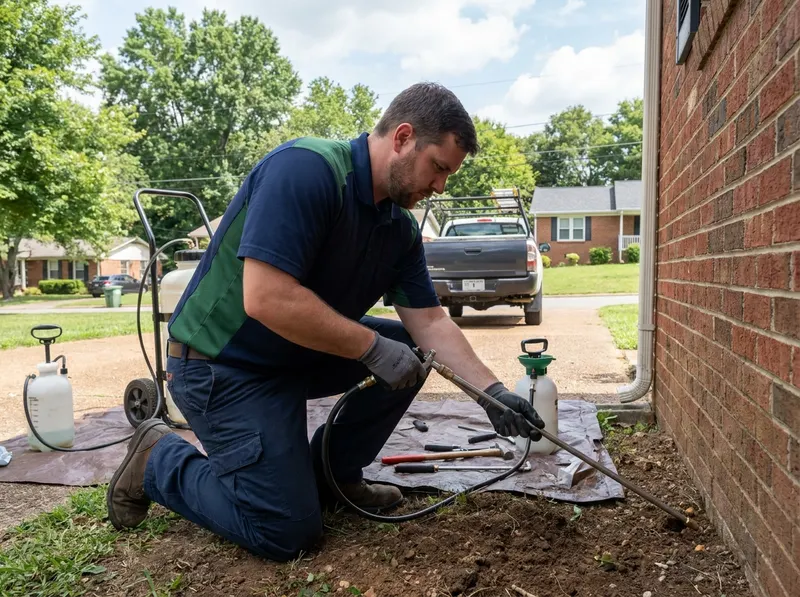
Liquid non-repellent soil barrier applications and comprehensive monitoring station matrices designed to eradicate subterranean termite colonies attacking structural framing, mudsills, and subfloors. Soil treatments utilize liquid termiticides applied by trenching 6 inches deep and 6 inches wide along foundation walls, injecting 4 gallons of solution per 10 linear feet to establish an uninterrupted subsurface zone. Bait stations are installed flush with turf surfaces every 8 to 10 feet along the property drip line, utilizing cellobiose matrices impregnated with chitin synthesis inhibitors that foraging worker termites transfer back to queens. Protocols reference technical termite control criteria outlined by the United States Environmental Protection Agency to ensure long-term perimeter defense that stops structural wood degradation before framing members lose load-bearing capacity.
Get a quote →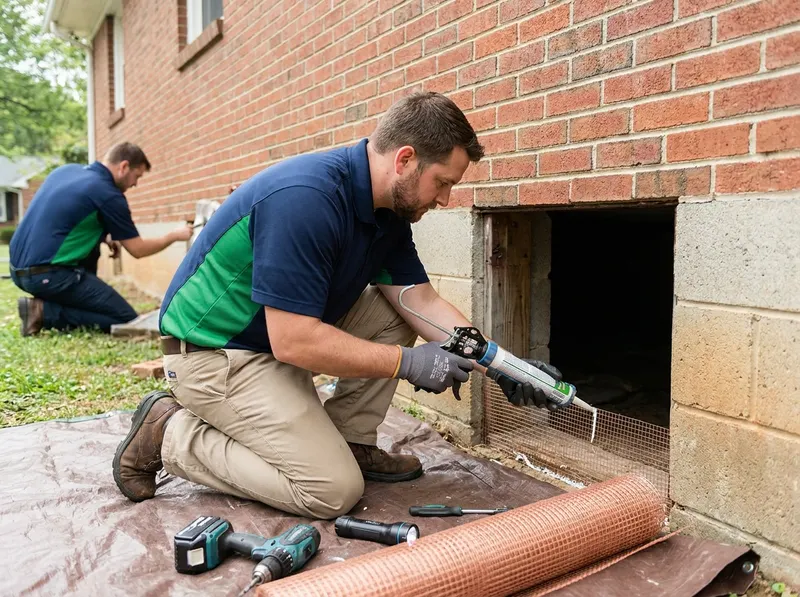
Total envelope structural proofing targeting commensal Norway rats, roof rats, and house mice through exterior 0.25-inch steel mesh sealing, interior trapping grids, and nesting site sanitization. Technicians inspect foundation sill plates, crawl space access hatches, roofline intersections, and plumbing chase cutouts where rodents capitalize on openings larger than a dime. Openings are mechanically sealed using 19-gauge galvanized hardware cloth and copper mesh backer rods, seated with elastomeric, polyurethane-based foams resistant to rodent gnawing. Interior trapping involves high-density snap-trap runways placed along verified sebum trails and baseboard transit routes, avoiding non-targeted secondary poisonings of domestic pets. Procedures conform to structural standards established by the Centers for Disease Control and Prevention , addressing health hazards related to rodent-borne pathogens.
Get a quote →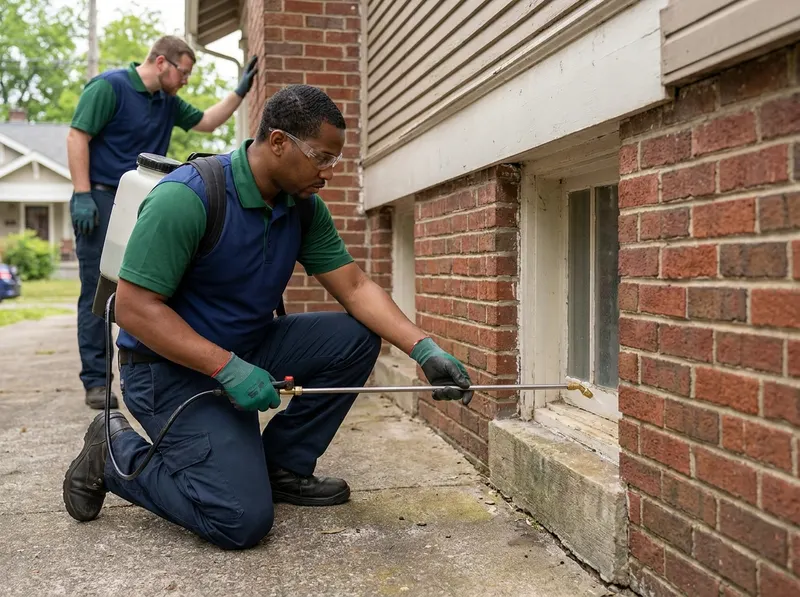
Specialized void dust treatments, targeted attic barrier micro-mists, and localized glue-board monitoring arrays engineered to neutralize dangerous brown recluse populations inhabiting wall cavities and basements. Brown recluse spiders possess unique physiological behaviors, including long life spans and low surface-grooming frequencies, rendering typical retail chemical barriers ineffective. Management requires micro-injecting amorphous silica gel and deltamethrin dust into electrical junction boxes, wall voids, and hollow cinder block cores using specialized bulb or electric dusters. Unfinished attic environments and drop ceilings receive low-volume residual pyrethroid fogging aimed at structural rafters. Monitoring grids consisting of heavy-duty cardboard sticky traps are distributed across floor-wall intersections at 10-foot intervals to track population reductions and capture foraging males during warm breeding months.
Get a quote →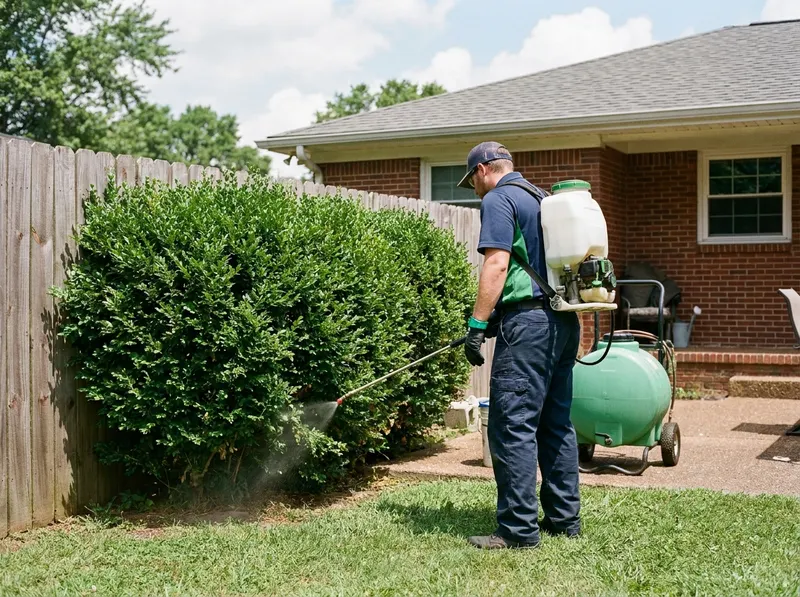
Directed foliage barrier misting and standing water biological larvicide distribution reducing active adult mosquito populations across exterior yard perimeters and dense landscape zones. Exterior applications employ motorized backpack mist blowers distributing microencapsulated bifenthrin solutions across the undersides of dense ornamental foliage, broadleaf groundcovers, and under-deck structural shadows where adult mosquitoes harbor during heat peaks. Standing water reservoirs that cannot be drained, including landscape retention areas, birdbaths, and exterior drainage catch basins, receive biological treatment using Bacillus thuringiensis israelensis (BTI) briquettes. Integrated pest management guidelines supported by the Entomological Society of America inform these application cadences, targeting peak reproductive windows while minimizing non-target impacts on beneficial pollinators.
Get a quote →
Intensive dual-action insect growth regulator applications paired with non-repellent spot treatments and bait matrix placements that halt cockroach reproductive cycles within kitchen and plumbing voids. Eradication combines hydramethylnon, fipronil, or indoxacarb gel baits spaced in pea-sized dots near heat-producing appliances, under-sink cabinet hinges, and pipe collars. Liquid applications deploy pyriproxyfen insect growth regulators (IGRs) that sterilize surviving nymphal populations, preventing the development of reproductive adult characteristics. High-efficiency particulate air (HEPA) vacuum units physically extract living aggregations, egg cases (oothecae), and allergenic frass from hidden galley seams before bait placements. Sanitation guidelines adhere to pest remediation recommendations maintained by the U.S. Department of Housing and Urban Development to alleviate indoor asthma triggers.
Get a quote →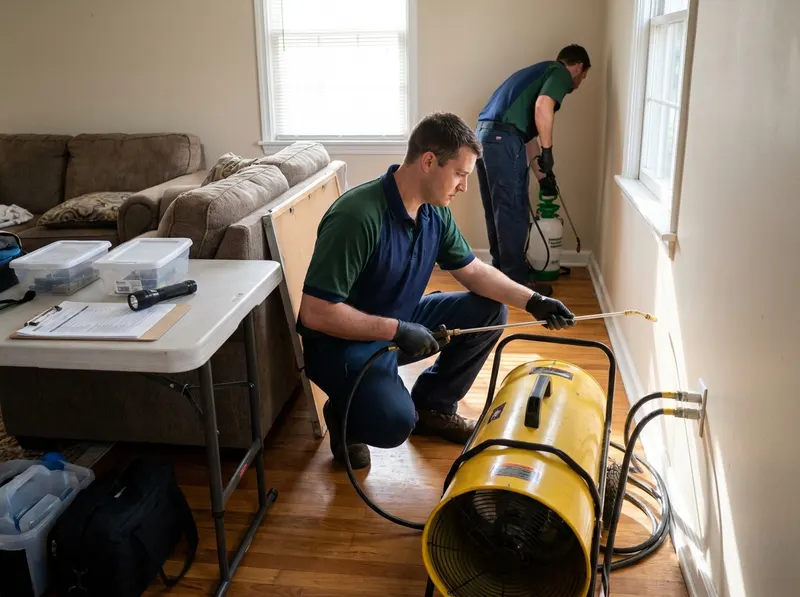
High-accuracy localized thermal applications combined with botanical residual contact agents to penetrate mattress seams, baseboards, and structural crevices for complete bed bug lifecycle eradication. Technicians systematically examine bed frames, headboard mounting brackets, electrical plates, and carpet perimeters using high-output LED inspection lights. Enclosures receive targeted thermodynamic steam applications exceeding 180 degrees Fahrenheit, ensuring instant mortality for eggs, nymphs, and adults hidden along structural wood and upholstery fibers. Targeted residual treatments integrate chlorfenapyr formulations that act as cellular metabolic disruptions against pesticide-resistant cimicid populations. Protocols reflect eradication methodologies published by the National Pest Management Association , ensuring complete life-stage eradication without damaging delicate personal furnishings.
Get a quote →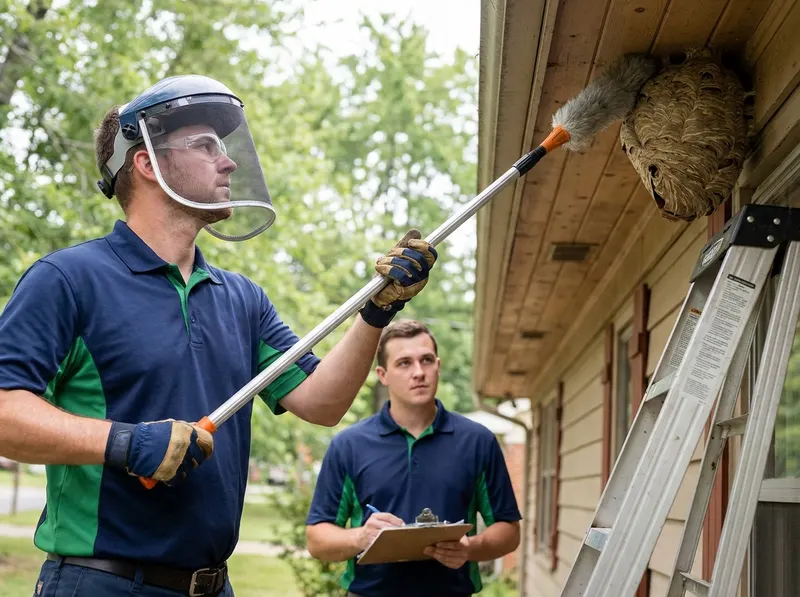
Clinical deconstruction and mechanical extraction of aerial baldfaced hornet, yellowjacket, and paper wasp colonies situated on roof eaves, chimneys, soffits, and exterior window frames. Treatments employ specialized direct-injection telescoping poles dispensing pressurized freeze formulations and fast-acting pyrethrum aerosols that suppress defensive worker swarming. Subterranean yellowjacket cavities receive direct-void dust injections, after which subterranean nest structures are physically excavated to halt secondary scavenging by ants. Nest attachment points on architectural surfaces are scraped clean and treated with concentrated microencapsulated repellent compounds to deter future nest building by fertile foundress queens during early spring. Work practices follow safety benchmarks established by the Occupational Safety and Health Administration to protect property occupants.
Get a quote →Sub-floor vapor barrier remediation, localized desiccant dust applications, and foundation vent hardware proofing to prevent camel crickets, centipedes, and wood-boring pests from colonizing damp crawl areas. Sub-structures undergo complete visual evaluations for standing water, framing mold, and breached soil covers. Technicians repair displaced polyethylene ground covers with continuous 10-mil reinforced vapor retarders taped along piers and perimeter footings. Structural framing members and ground perimeter ledges receive applications of inorganic borate compounds that deter wood-boring beetles and decay fungi. Perimeter vent openings are retrofitted with corrosion-resistant brass or stainless steel vent screens that block seasonal migrations of cave crickets, centipedes, and ground beetles seeking crawl space moisture.
Get a quote →You get a firm, itemized quote for your pest control services before any work begins, no surprises, no pressure.
Careful prep, tidy work, and a full cleanup when we are done. We treat your home and belongings like our own.
The same trusted, background-checked team from the first call to the final check.
Selecting structural pest defense depends on pest biology, seasonal pressure, and architectural design. If you detect active mud tubes, hollowed sill plates, or discarded swarmer wings around your foundation, choose dedicated liquid non-repellent termite soil barriers; if you notice nocturnal scratching, attic runway droppings, or shredded insulation, select mechanical multi-point rodent exclusion. The operational trade-off centers on treatment geography versus scope: liquid soil barriers focus intensely on exterior sub-grade perimeters to insulate structural framing, whereas rodent exclusion requires comprehensive envelope sealing from crawl space vents to high roofline gable junctions.
For broad nuisance prevention involving Argentine ants, paper wasps, and seasonal ground beetles, choose a quarterly exterior perimeter defense; for high-hazard interior threats such as cryptic brown recluse spiders or resilient German cockroaches, choose intensive targeted crack-and-crevice microencapsulated cleanouts. Routine exterior perimeter management preserves indoor living spaces with minimal chemical presence inside, while severe internal biological infestations require localized indoor disruption, detailed vacuuming, and systematic monitoring boards to confirm eradication. Property owners balancing preventive investments against active damage repair must weigh initial service intensity against biological persistence.
Subterranean termites work invisibly beneath floorboards and sill plates, meaning that delaying treatment until structural damage surfaces multiplies restoration expenditures tenfold relative to preventative exterior trenching. Conversely, surface invaders such as boxelder bugs or odorous house ants create minor cosmetic nuisance, making an extensive structural retrofit unnecessary when a targeted botanical perimeter spray adequately terminates ingress pathways. When balancing wood-destroying organism protection with interior environmental preferences, establishing non-volatile soil boundaries delivers long-lasting protection with zero interior indoor emissions.
For properties with severe crawl space humidity or limestone foundation fissures, mechanical exclusion paired with desiccant dust injection provides a non-toxic structural barrier that stops arthropods without recurring airborne chemical treatments. Commercial facilities and multi-family buildings benefit from continuous electronic monitoring and targeted bait networks, trading one-time curative fees for steady baseline documentation and proactive containment.
Every project gets a firm, written price after a free on-site visit. Ranges below for orientation.
Tell us about your pest control services job and we'll send a clear, written quote, usually the same day. Or just call and talk to a real Nashville pro.
(629) 319-7843
Nashville properties face acute biological pressures generated by the Cumberland River basin, dense rolling topography, and widespread karst limestone terrain. Elevated humidity levels and subterranean drainage pathways create abundant subsurface moisture pockets, accelerating subterranean termite swarm cycles near Shelby Bottoms Greenway and driving severe brown recluse infestations across historic stone basements in Belmont-Hillsboro, Sylvan Park, and Germantown. Dense hardwood canopy cover surrounding Radnor Lake State Natural Area and Percy Warner Park further encourages heavy commensal rodent and mosquito migrations toward residential foundations each autumn and spring. Across older Davidson County neighborhoods, such as The Nations and East Nashville, historic homes feature uninsulated crawl spaces, unvented stone rubble foundations, and aged framing with direct soil-to-wood contact points that attract Eastern subterranean termites. Regional infrastructure projects and rapid residential infill developments disrupt natural subterranean ecosystems, forcing rodent colonies along the CSX rail corridors and Charlotte Pike to seek structural shelter inside residential soffits and crawl spaces. These unique geological and architectural factors necessitate middle Tennessee pest defense strategies customized to local construction styles, soil types, and regional hydrology. Properties situated near the floodplains of Browns Creek and Mill Creek encounter persistent seasonal surges of floodwater mosquitoes and American cockroaches entering through municipal drainage networks. In hilly limestone regions like Green Hills and Crieve Hall, underground rock shelves prevent deep trenching, requiring pest technicians to employ specialized sub-slab masonry injection equipment to establish uniform subterranean termite protection barriers. Understanding these soil layers, seasonal flood patterns, and local construction trends enables MapleDrift Extermination to apply treatments calibrated precisely to each Nashville micro-environment.
Free estimates for Nashville & the surrounding area.
 MapleDrift Extermination